Gretta Sarfaty
*1947, Athenes, GR. Lives in São Paulo, BR
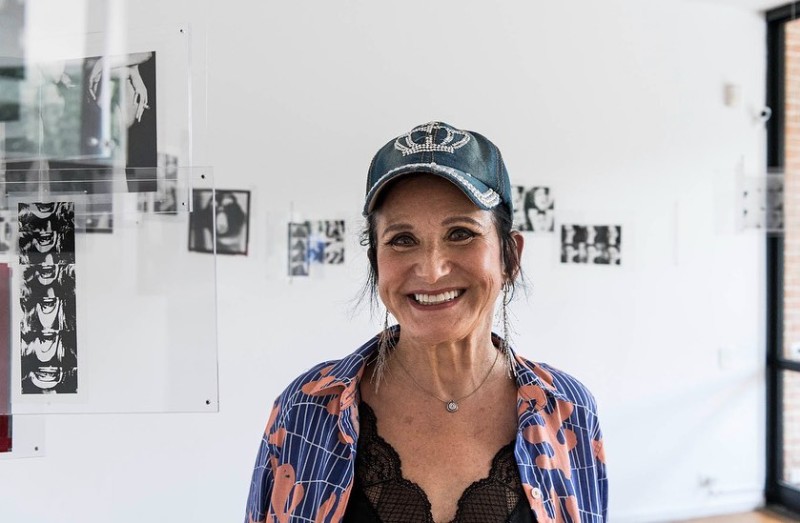
Since the early 1970s, Gretta Sarfaty has been questioning and undermining stereotypical representations of women. Her work is born from an investigative practice of photographic self-portraiture and performance that criticizes the cultural and technological reproduction of the female image.
In the 1960’s and 70’s, female artists began to break down the hegemonic male gaze more visibly by taking over the representation of the female body through their own perspective.
Amid Brazil’s dictatorship and the dominance of a conventional form of Pop Art, Sarfaty choose the medium of photography in small formats. She created fictional characters through self portraiture, a practice she called Auto-Photos: in front of her camera, the artist is disguised and mimicks various clichés of women types. Not only she criticizes the cultural construction of women representation, she also proclaims herself as an autonomous artist.
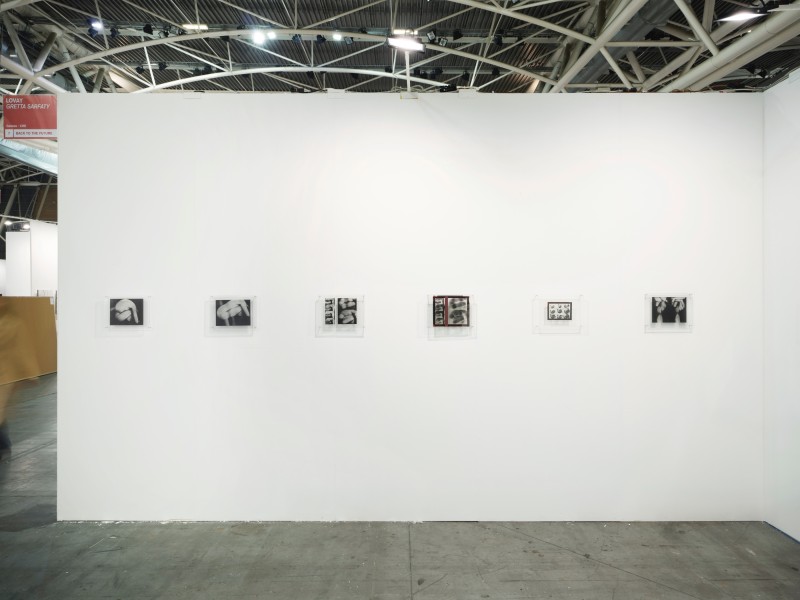
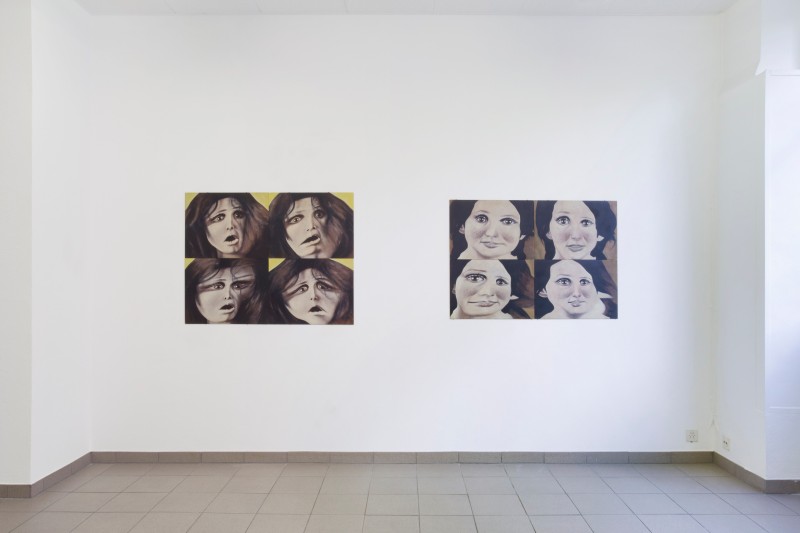
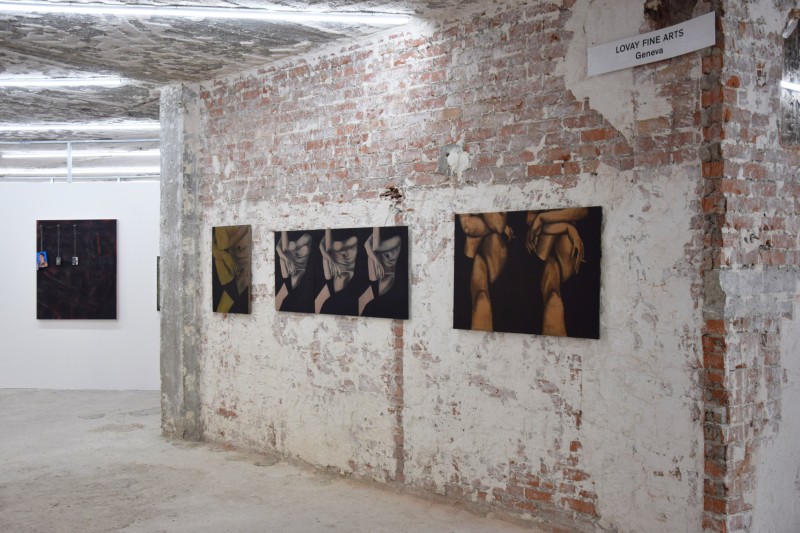
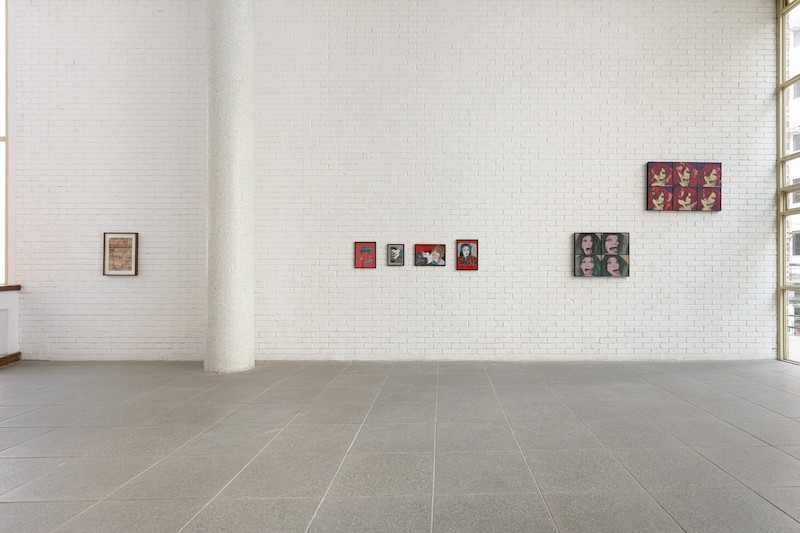
Subsequently, Sarfaty’s two most important series are Transformations (1974-1977) and A Woman’s Diary (1976-1977). In the first one she focuses on distorting her facial features, while in the second she takes photos of close-up details of her body, producing fragmented images that dissolve any sense of a complete figure. The body parts become almost abstract signs she organized in sequence. In both cases, she deconstructs her body parts, transforming and editing them by transfer and repetition.
In parallel, she selects certain photos and translates them into paintings that mimic the conventions of male-dominated Pop Art.
In 1979, she was one of the few women participating at a formative performance festival at Centre Georges Pompidou in Paris. The Journées interdisciplinaires sur l’art corporel et performances included Dan Graham, Lea Lubin and VALIE EXPORT among 30 other artists.