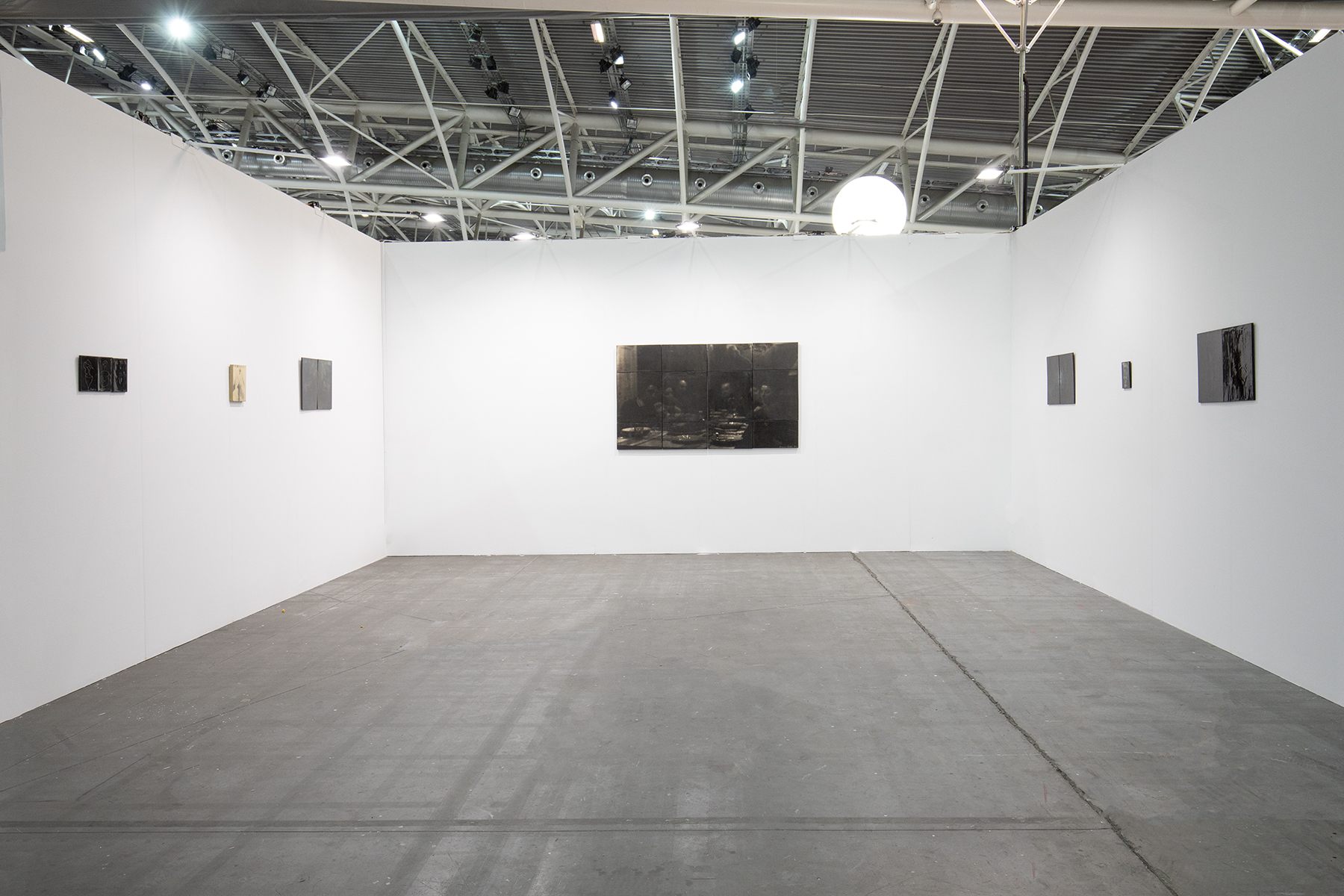
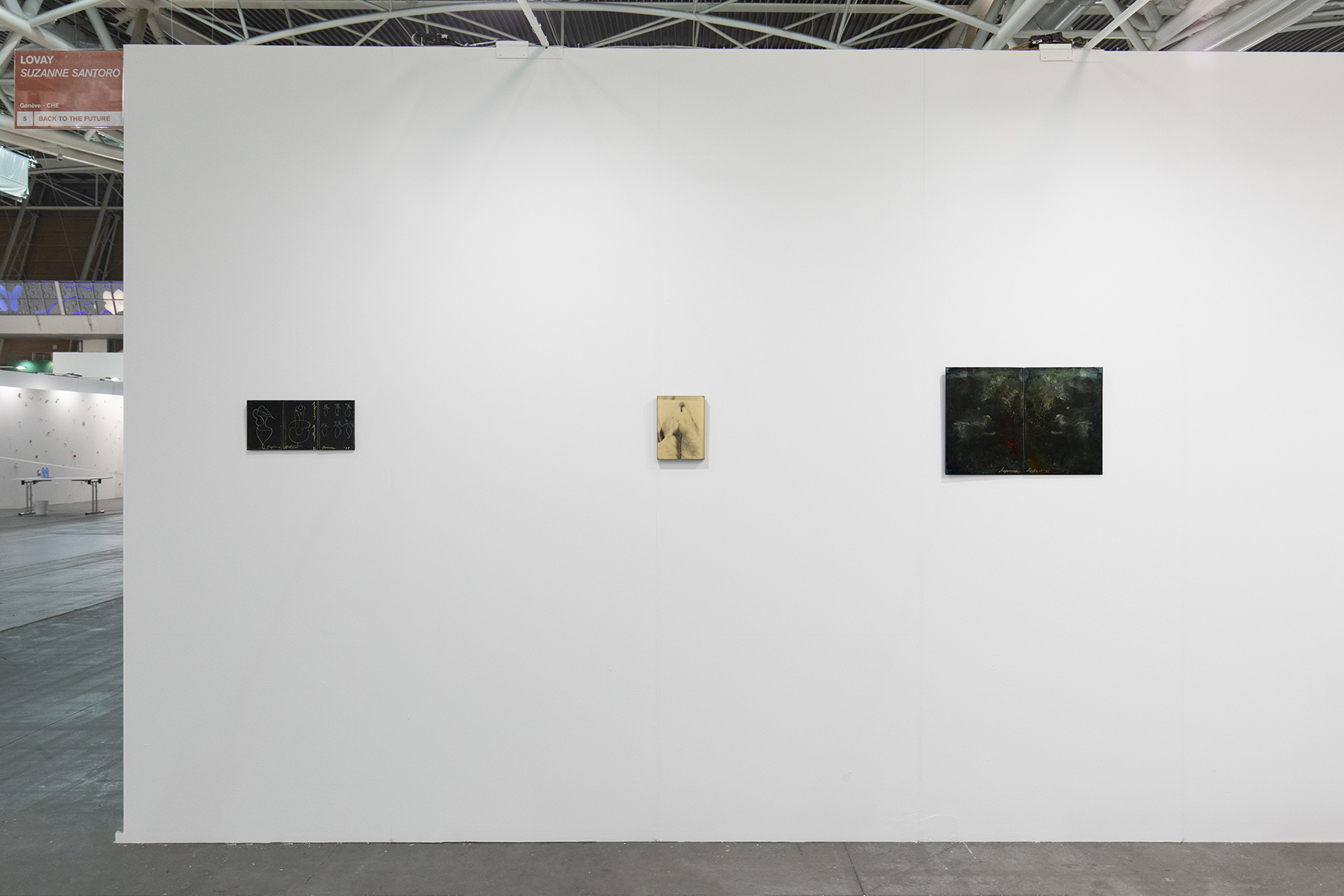
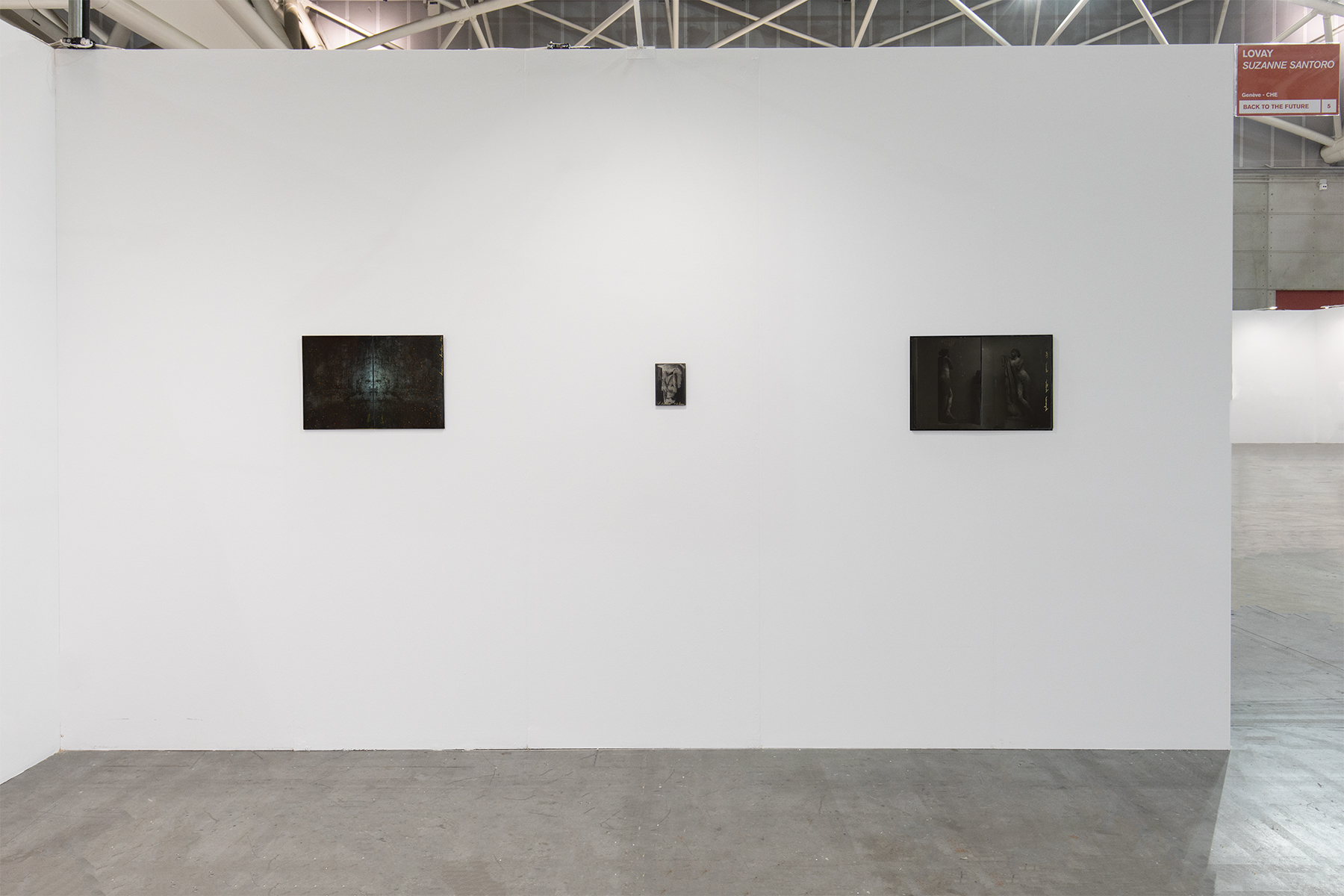
Lovay Fine Arts is delighted to participate in Artissima with a presentation of historical works by Suzanne Santoro (Brooklyn, *1946), highlighting a pivotal decade (1971–1981) in her artistic practice.
Booth BTTF5
Via Giacomo Mattè Trucco 70
10126 Torino


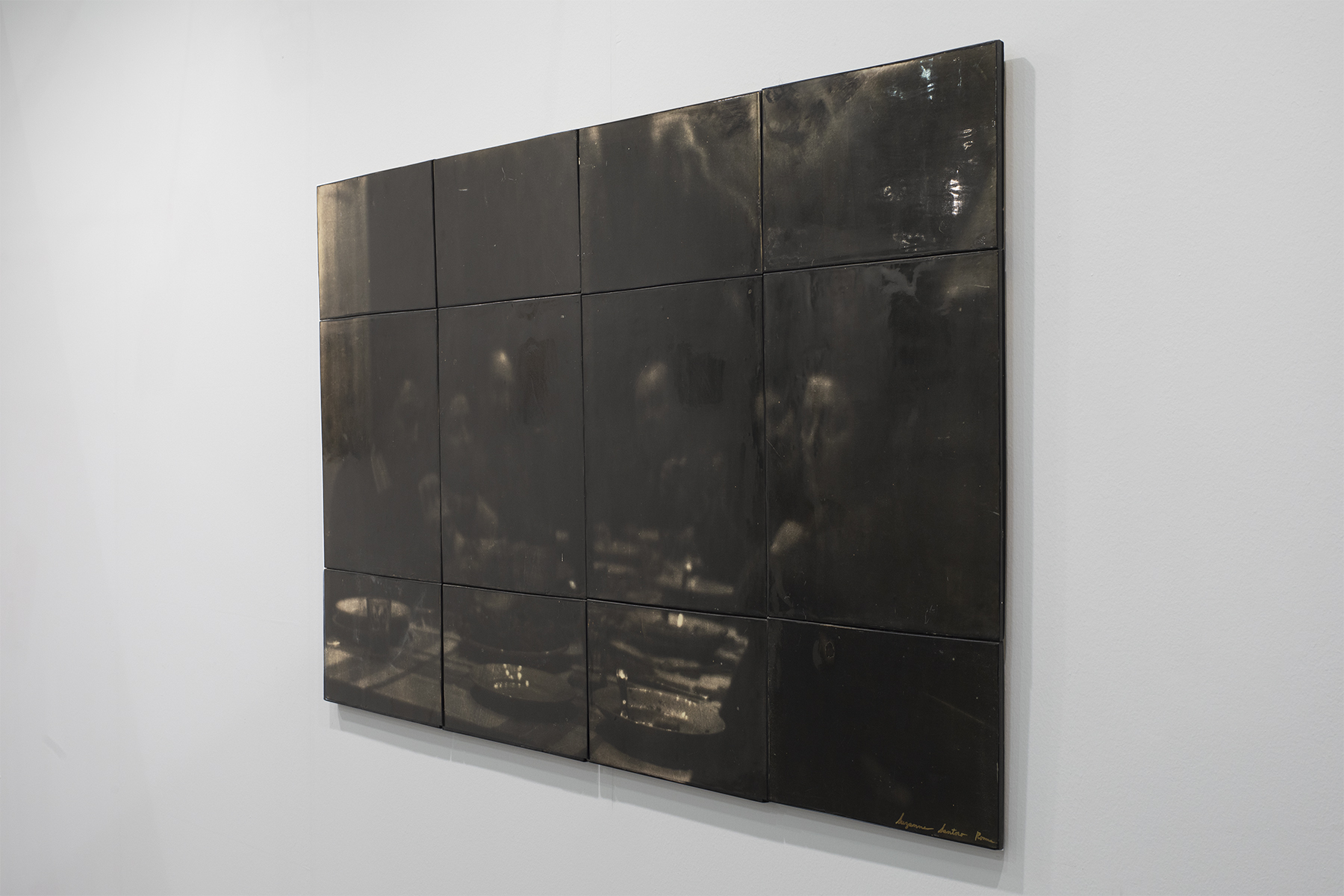
Our presentation brings together a group of ten works from the Black Mirrors series, made between 1971 and 1981.
Born in 1946 in Brooklyn, Suzanne Santoro graduated from the School of Visual Arts, New York. In the late 1960s she moved to Italy where she joined the feminist group Rivolta Femminile, alongside Carla Lonzi (1931-1982) and Carla Accardi (1924-2014). In 1976, together with Carla Accardi, Nedda Guidi, and Stephanie Oursler, she founded the Cooperativa Beato Angelico, the first women-only cooperative in Rome. There, they exhibited their own works alongside overlooked historical women artists such as Artemisia Gentileschi, Elisabetta Sirani, and Regina Bracchi.
Santoro’s artistic practice has been a rich journey into the realm of female representation and its hidden structures. She reflects on the partial erasure of women throughout Western art history, unveiling the visible in the invisible.
In the early 1970s, Santoro started her most significant body of work, the Black Mirrors. Prefiguring the strategies of the Pictures Generation, the first ones were museum postcards depicting ancient female statuary—originally created by male artists and sold in institutional gift shops. Boldly signed with a golden Sharpie, these appropriated postcards reclaim authorship and subverts the dominant male gaze in art history. The following Black Mirrors were Santoro’s own photographs of historical sculptures or ancient sites depicting female bodies. Mounted on wood panels, they are coated in resin and polished. Dark and reflective, these powerful objects confront the viewer with the historical contradictions of female representation—simultaneously hyper-visible and silenced.
At the same period, she created a series of resin sculptures cast on her own body and intended to be representations of the female anatomy made by a woman based on her own anatomy.
Since the early 2000s, she has been developing various series of paintings on paper that explore femininity through organic forms, repetitive motifs. In the Blood Roses (2004–2009) and Femaleness (2006–2012) series, she moved away from the photographic appropriation and sculptural processes.
In Blood Roses, the flower becomes a central motif through which Santoro explores the relationship between femininity, sexuality, and the natural world. Executed in tempera on colored paper, these compositions bring together circular forms, symmetry, and dense, expressive surfaces. In Femaleness, watercolor allows Santoro to pursue related questions through a more fluid and variable visual language. Both series attempt to articulate a visual vocabulary for the experience of being a woman, reclaiming forms of expression historically obscured or marginalized within Western art.
Recent exhibitions:
MAXXI, Roma; MAMCO, Geneva; Macro, Roma; Lovay Fine Arts, Geneva
Selected collections:
Verbund Collection, Vienna; MAMCO, Geneva; National Museum of Women in the Arts, Washington DC